
Why Renewable Energy Deployment Speed Is Critical?
March 30, 2026
Analysing the role of renewables in managing the middle east energy crisis.
Why Renewable Energy Deployment Speed Is Critical to Managing Middle East Energy Crisis
The Middle East remains strategically volatile, and energy markets remain vulnerable to geopolitical disruption. Recent tensions underscore a fundamental reality: when energy supply faces potential crisis, the speed of deploying alternative generation becomes critical. Solar and wind technologies possess decisive advantages over nuclear power and fossil fuels, advantages measured not in aspirational goals but in months versus years.
The Speed Advantage: Solar and Wind
Solar installations require less than one year of construction, followed by 3-12 months of commissioning. Onshore wind takes 2-9 months to build, with similar commissioning timelines. These timelines, measured in single-digit months, represent an order of magnitude faster than alternatives.
Supply chains for solar and wind remain robust and globally distributed. Multiple manufacturers across diverse regions ensure equipment availability within months. This proven resilience under pandemic pressure demonstrates reliability when crisis demands rapid deployment.
Crucially, renewable installations represent durable infrastructure with 25-40 year lifespans. The months of construction time is negligible compared to decades of operation. A solar farm installed during a 2024 crisis will generate electricity for three decades, permanently reducing energy price vulnerability. Emergency renewable deployment doesn't merely address immediate crises, it creates lasting infrastructure that continuously improves energy security.
Unlike fuel supply chains vulnerable to blockade or disruption at strategic chokepoints, renewable electricity is generated locally. This geographic distribution fundamentally transforms energy security: no imports of physical fuel, no transits through contested waters, no vulnerability to singular supply routes.
The Permitting Problem: The Hidden Constraint
Yet despite these advantages, renewable deployment in the UK, US, and Europe faces a paradoxical constraint: permitting often takes longer than construction itself. In the UK, projects spend 3-5 years navigating planning permission, public consultation, environmental assessment, and grid connectivity; completely negating the technology's speed advantage.
The permitting problem emerges from multiple sources: planning permission bureaucracy, public notification requirements, environmental impact assessments, and grid connection delays. A "no-build by default" mentality means renewable projects must prove acceptability rather than being presumed acceptable absent compelling objections.
The U.S. situation is worse. The incoming administration adopts overtly hostile renewable policies, directly exacerbating global energy crisis risk. Since oil is globally traded, U.S. policy restricting renewables while increasing energy demand simply absorbs available global oil supply, driving prices everywhere. There is no indication the U.S. government will limit downside consequences.
Why Alternatives Fail
Compared to renewables, alternatives are fundamentally inadequate for crisis response.
Nuclear plants require 6-10 years of construction alone, following years of permitting and political negotiation. This timeline cannot be compressed. Nuclear plants cannot address acute crises within relevant timeframes.
Oil refineries take 5-10 years to plan and build. More critically, developing new oilfields cannot replace Middle East supply disruptions. The UK's new oil and gas licenses will yield approximately 600 million barrels of oil equivalent through 2050, equivalent to just one month of Strait of Hormuz transit (21 million barrels daily) or roughly one year of UK consumption (1.325 million barrels daily).
In a globalised market, domestic oil production offers limited strategic benefit unless states restrict exports to domestic use. If North Sea oil enters global markets, it provides no protection against price spikes driven by supply losses elsewhere. Prices are set by global conditions, not national reserves.
More fundamentally, the North Sea faces structural decline. Fields are aging, production declining naturally, and future discoveries increasingly marginal. Strategic fantasies of energy independence ignore depletion dynamics.
Infrastructure Vulnerabilities
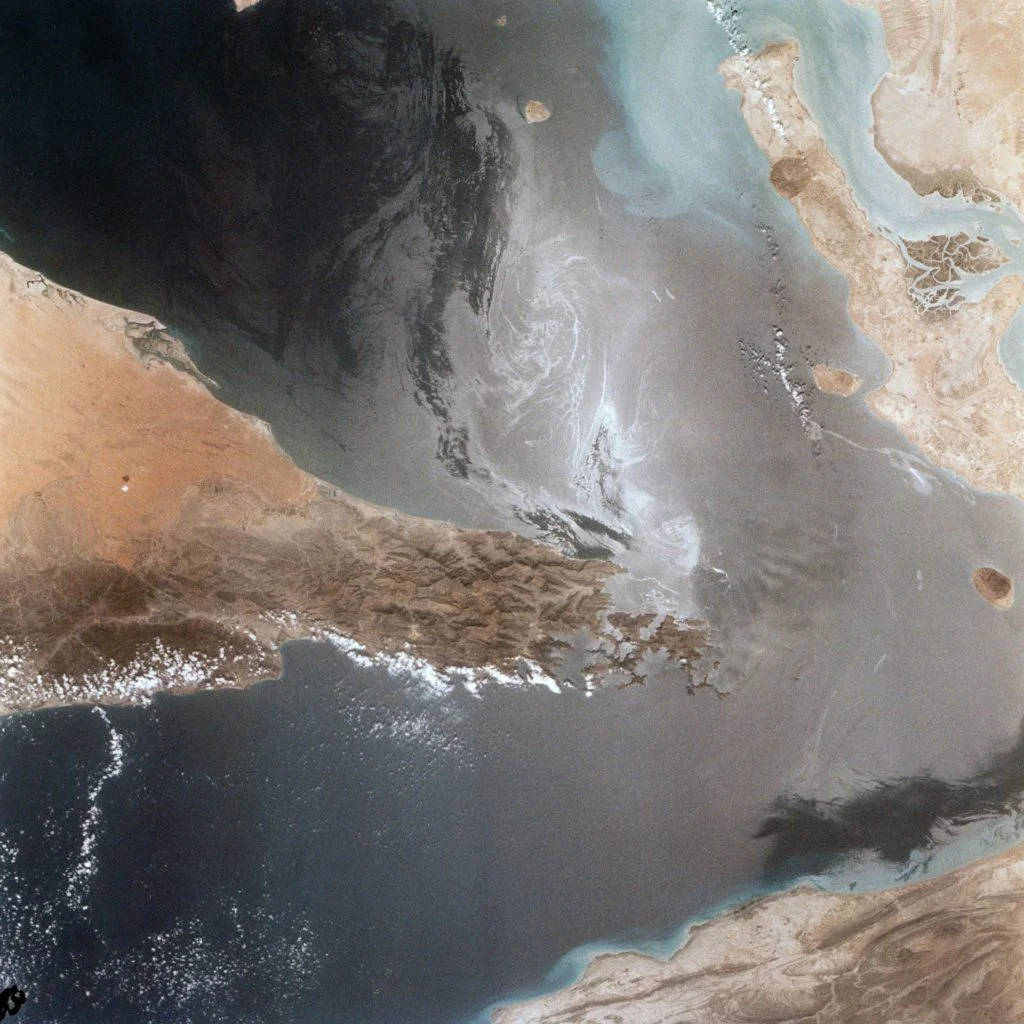
Both conventional and nuclear infrastructure present concentrated physical targets vulnerable to disruption. The Strait of Hormuz. represents a singular chokepoint that could be partially or wholly disrupted by geopolitical actors. This vulnerability cannot be engineered away; it is inherent to geographic chokepoints.
Nuclear facilities similarly concentrate risk in small numbers of large installations requiring continuous cooling and security. In regions experiencing conflict or instability, nuclear facilities become potential military targets, with potential catastrophic environmental consequences.
Conventional energy infrastructure concentrates risk in specific locations: processing facilities, refineries, export terminals. These can be damaged in conflict. Pipelines crossing disputed territory become bargaining chips in geopolitical disputes. Unlike distributed solar and wind installations spread across a nation, conventional infrastructure creates concentrated vulnerability points requiring military or political protection.
The EV Transition Paradox
As oil prices spike from Middle East disruptions, economic pressure accelerates EV adoption, creating a dangerous secondary challenge. EV acceleration drives massive electricity demand growth precisely when grid infrastructure struggles to accommodate it.
Current infrastructure was designed for vehicle fuelling through petrol stations, not distributed home charging. The "terrace and apartment problem" is immediate: approximately one-third of UK households lack direct parking access. Installing charging infrastructure requires expensive building modifications, landlord approval, and electrical infrastructure upgrades.
Public charging infrastructure presents parallel challenges. The UK's approximately 8,000 petrol stations cannot translate into equivalent electrical charging infrastructure without substantial cost and complexity. Remote areas face acute challenges, since home charging is infeasible for many residents.
Residential substations, designed for heating and appliance loads, cannot accommodate simultaneous multi-unit EV charging. A residential area with 100 apartments at 30% EV adoption could eawsily require over a megawatt of simultaneous charging, exceeding substation capacity. Grid-wide upgrades represent multi-billion-pound investments consuming years of planning and installation.
Solutions: Permitting Reform and Distributed Generation
If governments understand the severity and urgency of these risks, solutions emerge from analysis.
The most direct solution is comprehensive permitting reform. This does not require eliminating environmental protection or public consultation, legitimate objectives deserving protection. Rather, it requires establishing clear permitting timelines (6 months rather than 5+ years), establishing criteria under which renewable projects are presumed acceptable absent compelling objections, and creating expedited approval pathways.
Such reform alone would reduce total project timelines from 5+ years to approximately 18 months, a 65% reduction achieved through administrative reform rather than technological innovation.
Grid operators must simultaneously identify bottlenecks limiting renewable capacity and expedite necessary upgrades in parallel with renewable projects rather than discovering limitations during development.
Demand-side generation and storage represent critical alternatives where grid capacity is constrained. Rooftop solar generates electricity where it is consumed, reducing grid strain. Behind-the-meter battery storage enables load shifting. Vehicle-to-grid technology transforms EV batteries into distributed storage resources.
These solutions require less permitting (rooftop solar on existing buildings often needs no planning permission), deploy faster (weeks to months), and reduce grid infrastructure stress (locally-consumed electricity reduces transmission requirements).
Limited Good Options
When energy supply faces potential crisis, time becomes the scarcest strategic resource. Solar and wind technologies possess decisive deployment advantages in months, not years. Yet this advantage remains unrealised because permitting failures make regulatory timelines longer than construction timelines.
The Middle East crisis is not an anomaly requiring emergency response; it accelerates existing structural trends. Geopolitical volatility, resource depletion, and climate impacts will create increasing energy disruption. Whether governments respond by building resilient, distributed renewable systems deploying at speed, or whether they cling to centralized, slow-to-build, physically concentrated infrastructure, remains an open question.
For countries confronting Middle East energy vulnerability, permitting reform for renewable deployment represents not environmental ambition but basic crisis management. Renewables will dominate future energy systems, driven by economics and climate necessity. The question is whether they deploy fast enough to prevent the crises that slow deployment enables.
Ready to build models in real-time?