
The Duck Curve and the Shrinking Solar Farm
October 15, 2025
The Duck Curve and Grid Flexibility: Why Solar Abundance Creates New Challenges
The Duck Curve and Grid Flexibility: Why Solar Abundance Creates New Challenges
The "duck curve" a term coined by the California Independent System Operator (CISO) describes one of the most vexing challenges facing modern electrical grids: the dramatic mismatch between peak electricity demand and solar generation. The curve gets its name from its distinctive shape: a pronounced dip during midday when solar generation peaks, followed by a sharp spike in the evening as the sun sets and demand rises. Managing this imbalance has become central to grid operations everywhere solar penetration is significant.
Understanding the Duck Curve and Its Mitigation
The duck curve emerges from a simple fact: solar generation follows the sun, peaking at midday when demand is typically lowest. Evening hours when people return home, cook dinner, and turn on heating or cooling see demand spike just as solar generation collapses. The grid must either store the midday surplus or shift demand to match generation. If neither happens, the grid must maintain sufficient backup capacity to meet the evening peak, even though that capacity sits idle during the day.

Several strategies can mitigate this imbalance. Utility-scale energy storage whether pumped hydroelectric storage, batteries, or vehicle-to-grid systems can store midday solar surplus and discharge it during the evening peak. Alternatively, demand-side management can shift consumption patterns: real-time pricing that encourages charging electric vehicles or running dishwashers during midday; direct control over flexible loads like heating and cooling systems; or simple awareness campaigns asking consumers to shift discretionary use away from peak hours.
Super-regional grids like Europe's Nord Pool demonstrate another approach: geographic diversity and interconnection. When the sun shines in Germany but is clouded over in Denmark, interconnections allow power to flow from Germany to Denmark, smoothing supply across a broader region. This requires investment in transmission capacity and coordination across national boundaries politically complex but technically powerful.
Peak shaving and load shifting deliberate strategies to flatten demand peaks and move consumption to periods of abundant generation can also help. But they require either sophisticated control systems, economic incentives that influence consumer behaviour, or some combination of both.
The UK Advantage: Resources and Timing
The United Kingdom finds itself in a relatively fortunate position regarding the duck curve. The UK's huge wind resources particularly offshore wind in the North Sea largely offset the need for gas-fired backup generation. When the sun is not shining, wind often is. This geographic and temporal complementarity reduces the severity of the duck curve problem.
The UK has been extremely successful on the global stage in renewable energy deployment. Yet a subtler advantage underlies much of that success: peak electricity demand in the UK typically occurs during business hours 9 AM to 5 PM and drops significantly at night. This demand pattern is compatible with high solar penetration, despite the UK's latitude exceeding 50 degrees north.
Why? Because solar generation, even at these northern latitudes, peaks during business hours when demand is high. The evening peak when solar generation is zero occurs when demand is naturally lower. The duck curve exists in the UK, but its magnitude is smaller than in regions with different demand profiles. A southern region with summer air-conditioning demand peaking in the evening would face a much more severe duck curve.
This combination of strong wind resources, favourable demand timing, and successful renewable deployment has allowed the UK to maintain grid stability while achieving high renewable penetration. But this advantage is not universal. Other regions face very different challenges.
South Africa: A Cautionary Tale of Inflexibility
South Africa illustrates what happens when a grid lacks both the natural resources and the technical flexibility to accommodate rapid changes in supply and demand. The country has negligible installed wind capacity. Solar represents the primary renewable resource, yet the installed base remains well below 50% of the UK's solar capacity despite South Africa's superior solar resource.
South Africa's electricity system is overwhelmingly reliant on coal-fired generation. This reliance creates an acute inflexibility problem. Coal plants require 10–20 hours to ramp from cold start to full output a response time that is incompatible with the rapid fluctuations introduced by high solar penetration. Modern gas turbines, by contrast, can reach full load from cold start in under two hours. Coal simply cannot respond to instantaneous grid fluctuations.
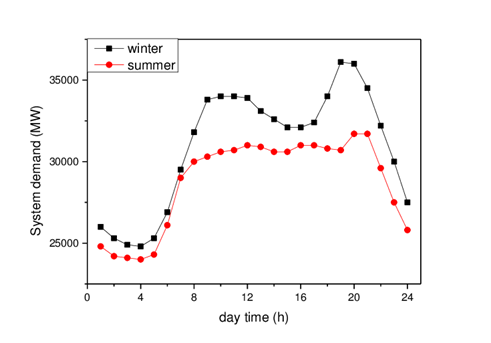
The nuclear component of South Africa's generation mix is roughly equivalent to the UK’s as a percentage of total capacity but operates at dramatically higher utilisation 98% compared to 55% on a typical day in January. This means nuclear capacity is already fully committed and cannot be flexibly dispatched to compensate for renewable variability. There is no spare capacity to draw upon when solar generation fluctuates.
Interestingly, South Africa faces a low risk of "dunkelflaute" the German term for extended periods of dark, windless weather that create generation shortfalls. South Africa's climate and geography make simultaneous failure of solar and wind generation unlikely. But the country's actual problem is the opposite: abundant solar generation that the grid cannot absorb.
The Curtailment Crisis: Why More Solar Makes Things Worse
South Africa's solar resource is genuinely excellent potentially higher than most other regions globally. Yet this advantage is systematically squandered. Solar generation is increasingly curtailed deliberately shut down or prevented from feeding into the grid because the grid cannot accommodate it.
Three factors drive this curtailment:
Coal inflexibility. Coal plants operate continuously at baseload, producing power whether or not it is needed. When solar generation peaks, the grid has a choice: curtail solar (wasting the generation), reduce coal output (which is slow and economically inefficient), or accept frequency and voltage instability. In practice, South Africa chooses curtailment.
Low connectivity with other markets. The UK's advantage stems partly from integration with European markets via interconnection cables. Power can flow across borders to regions with different generation and demand profiles. South Africa has minimal interconnection with neighbouring countries. The grid cannot export surplus solar generation; it must either store or curtail it.
Grid capacity limits. Distribution networks particularly at low and medium voltages were sized for a world where electricity flowed primarily from large, centralised coal plants. Distributed solar generation, flowing from rooftops and small installations into distribution networks designed for one-way flow, creates congestion and voltage instability that the aging infrastructure cannot accommodate.
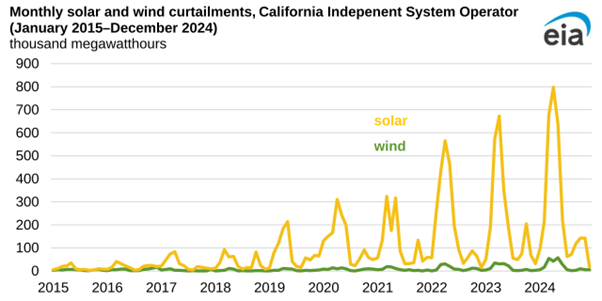
The result is a vicious cycle: solar installations are incentivised by good economics and excellent resources but increasing installation rates worsen the curtailment problem. What looks like ahigh-yielding solar investment today becomes progressively less valuable as more solar comes online and is curtailed. A solar farm installed in 2024 might generate full output for a decade. A solar farm installed in 2030 might be curtailed 30% of the time. A solar farm installed in 2040 might be curtailed50% of the time or more.
The Broader Lesson: Solar's Impact on Existing Generation
South Africa's experience illustrates a principle that applies everywhere: increasing solar penetration deteriorates the operational and financial performance of all other plants on the grid. This is not necessarily a bad thing coal plants deserve to be displaced. But it creates acritical timing problem.
Coal plants are capital-intensive, with lifespans of 30–50 years. A coal plant built in 1990 was designed and financed on the assumption of 40 years of reliable operation generating baseload power. If that plant is rendered economically unviable by solar penetration in its third decade of operation, the capital has not been recovered. The owner faces a choice: run the plant at low utilisation (covering only fuel and maintenance costs, losing money on capital recovery), or retire it early (writing off stranded assets).
Neither option is attractive. The result is political resistance to solar deployment not because solar is technically inferior, but because it economically threatens existing assets and the communities that depend on them. This resistance manifests as grid constraints, interconnection delays, and curtailment policies that suppress solar deployment.
This dynamic is playing out across the world. It is particularly acute in regions like South Africa where coal remains politically and economically dominant, and where the grid lacks the flexibility to absorb renewable variability without either massive investment in storage and interconnection, or politically difficult decisions to retire coal assets before the end of their designed life.
The Path Forward: Flexibility Over Abundance
The duck curve, curtailment, and grid stress are not problems with renewable energy itself. They are problems with grids designed for a different era grids optimised for centralised, predictable generation flowing one-way to consumption. These grids can accommodate some renewable penetration but begin to fail as penetration increases.
The solution is not to slow renewable deployment. It is to transform grids themselves: investing in storage capacity that can absorb midday solar surpluses and release them during evening peaks; deploying demand-side management systems that shift consumption to periods of abundant generation; building interconnections that allow power to flow across broad regions with complementary generation patterns; and retiring inflexible fossil fuel plants on a planned, managed timeline rather than being forced to keep them running as essential backup.
The UK's relative success reflects good resources and helpful timing advantages it must not take for granted. South Africa’s struggle reflects both inherent disadvantages (lower wind resources, weaker regional interconnection) and solvable problems (coal inflexibility, inadequate grid infrastructure, distributed generation management).
For both, and for every other region pursuing renewable energy, the critical insight is the same: abundance of generation is not enough. Grids need flexibility the ability to match supply and demand in real time, absorb variability, and accommodate the transition away from fossil fuels. That flexibility does not emerge naturally. It requires deliberate investment, coordination, and planning. Without it, even the best renewable resources will be curtailed, wasted, or replaced by fossil fuel generation because the grid simply cannot accommodate them.
The duck curve is not a problem to be solved once. It is a symptom of a fundamental mismatch between the grids we have inherited and the energy systems we are trying to build. Solving it requires not just more solar panels, but the infrastructure, incentives, and governance to ensure that solar generation when abundant is either used, stored, or shifted in demand, not simply thrown away.
Ready to build models in real-time?